The Day of Arafah is one of the most important days in the Islamic calendar. It falls within the first ten days of Dhul Hijjah and stands out as a peak moment for worship, reflection, and forgiveness.
It is not limited to those performing Hajj. For every Muslim, it is a rare opportunity to turn back to Allah, increase in good deeds, and seek forgiveness in a way that is not found on most other days of the year.
1. What Is the Day of Arafah
The Day of Arafah is the 9th day of Dhul Hijjah, the day before Eid al-Adha. It is directly connected to Hajj and is the central day of the entire pilgrimage.
The Prophet ﷺ said:
"The Hajj is Arafah."
(Jami` at-Tirmidhi)
This shows that without reaching Arafah, the Hajj itself is not complete.
1.1 What Happens Before Arafah (for Pilgrims)
On the 8th of Dhul Hijjah, pilgrims enter into the rites of Hajj and travel to Mina. They spend the day and night there in prayer and preparation before moving on to Arafah the next morning.
1.2 What Happens on the Day of Arafah
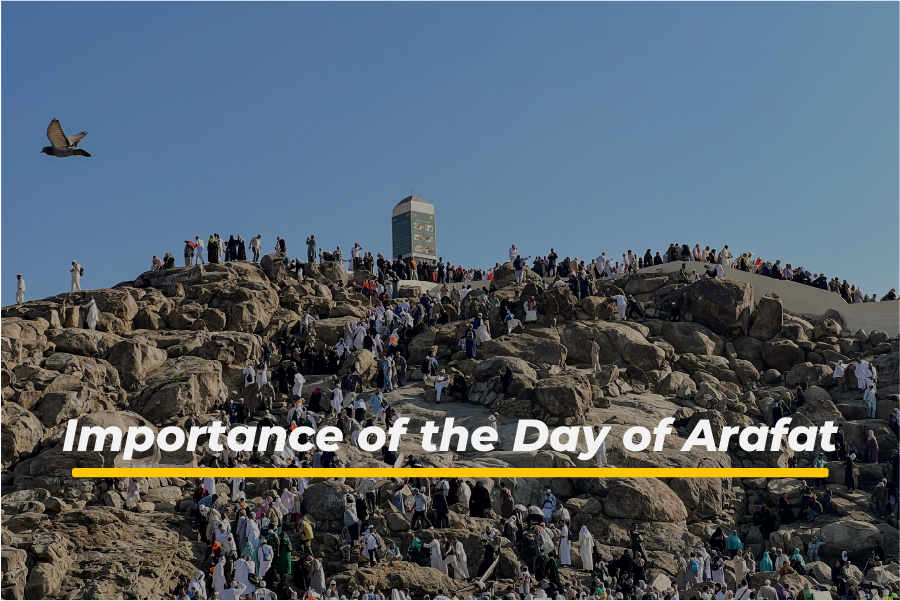
On the 9th, pilgrims travel to the plain of Arafah and remain there from midday until sunset. This is known as wuquf (standing at Arafah), and it is the most important part of Hajj.
During this time, pilgrims focus entirely on worship. They pray, make du'a, seek forgiveness, and remember Allah continuously.
The Prophet ﷺ described the significance of this gathering:
"There is no day on which Allah sets free more people from the Fire than the Day of Arafah."
(Sahih Muslim)
He ﷺ also delivered his Farewell Sermon on this day, emphasising justice, unity, and accountability, which further highlights its importance.
Another key point is that pilgrims do not fast on this day. The Prophet ﷺ was seen drinking while at Arafah:
The people doubted whether the Prophet ﷺ was fasting on the Day of Arafah, so milk was brought to him while he was at Arafah, and he drank it.
(Sahih al-Bukhari)
This shows that their focus is on the physical and spiritual demands of standing at Arafah, not fasting.
1.3 What Happens After Arafah
After sunset, pilgrims leave Arafah for Muzdalifah, where they spend the night in worship and collect pebbles.
The next day, on Eid, they return to Mina and perform Ramy al-Jamarat for the three days of Eid. This marks the transition into the final rites of Hajj, alongside sacrifice and completing the pilgrimage.
2. The Virtue, Fasting, and Importance of the Day of Arafah
The Day of Arafah is marked by immense mercy, forgiveness, and reward.
The Prophet ﷺ said:
"There is no day on which Allah sets free more people from the Fire than the Day of Arafah."
(Sahih Muslim)
This highlights the scale of forgiveness associated with this day.
Fasting is one of the most emphasised acts for those not performing Hajj. The Prophet ﷺ said:
"Fasting the Day of Arafah expiates the sins of the previous year and the coming year."
(Sahih Muslim 1162)
This gives the day a clear focus. It is a time to actively seek forgiveness and make the most of a rare opportunity for spiritual renewal.
For pilgrims, however, the focus is different. They are engaged in the rites of Hajj, and fasting is not encouraged for them on this day due to the demands of the pilgrimage.
3. The Best Actions on the Day of Arafah
The Day of Arafah is not limited to one act. It is a day to increase in all forms of worship.
Fasting remains the most emphasised act for those who are able. Even if someone cannot fast the earlier days of Dhul Hijjah, fasting on Arafah alone carries significant reward.
Alongside fasting, the day should be used for du'a, repentance, and remembrance of Allah. The hadith about Allah freeing people from the Fire on this day shows that it is a time of mercy, making it a strong moment to seek forgiveness and turn back sincerely.
Charity and other good deeds also align with the broader principle of increasing righteous actions during these days. The aim is to make full use of the day, not limit it to a single act.
4. The Day of Arafah: Pilgrims vs Non-Pilgrims
The Day of Arafah is experienced differently depending on whether someone is performing Hajj or not.
For pilgrims, it is the central day of Hajj. Their main act is standing at Arafah in worship, which defines the pilgrimage itself.
For those not on Hajj, the focus shifts. Fasting becomes the most emphasised act, supported by the clear reward mentioned in hadith. Alongside this, du'a, dhikr, and reflection become key ways to engage with the day.
There is also a clear distinction regarding fasting. The Prophet ﷺ was seen not fasting on the Day of Arafah while at Arafah during Hajj, which shows that pilgrims are not encouraged to fast on this day.
This difference highlights how the same day carries different forms of worship depending on a person's situation.
5. Final Takeaway
The Day of Arafah is a rare opportunity within the year. It combines forgiveness, reward, and spiritual focus in a single day.
The Prophet ﷺ said:
"Fasting the Day of Arafah expiates the sins of the previous year and the coming year."
(Sahih Muslim 1162)
For those not on Hajj, this alone makes it one of the most valuable days to act on.
Whether through fasting, du'a, or reflection, it is a day that should not be missed.








 Gift Aid
 Personal Details
 Secure Donation