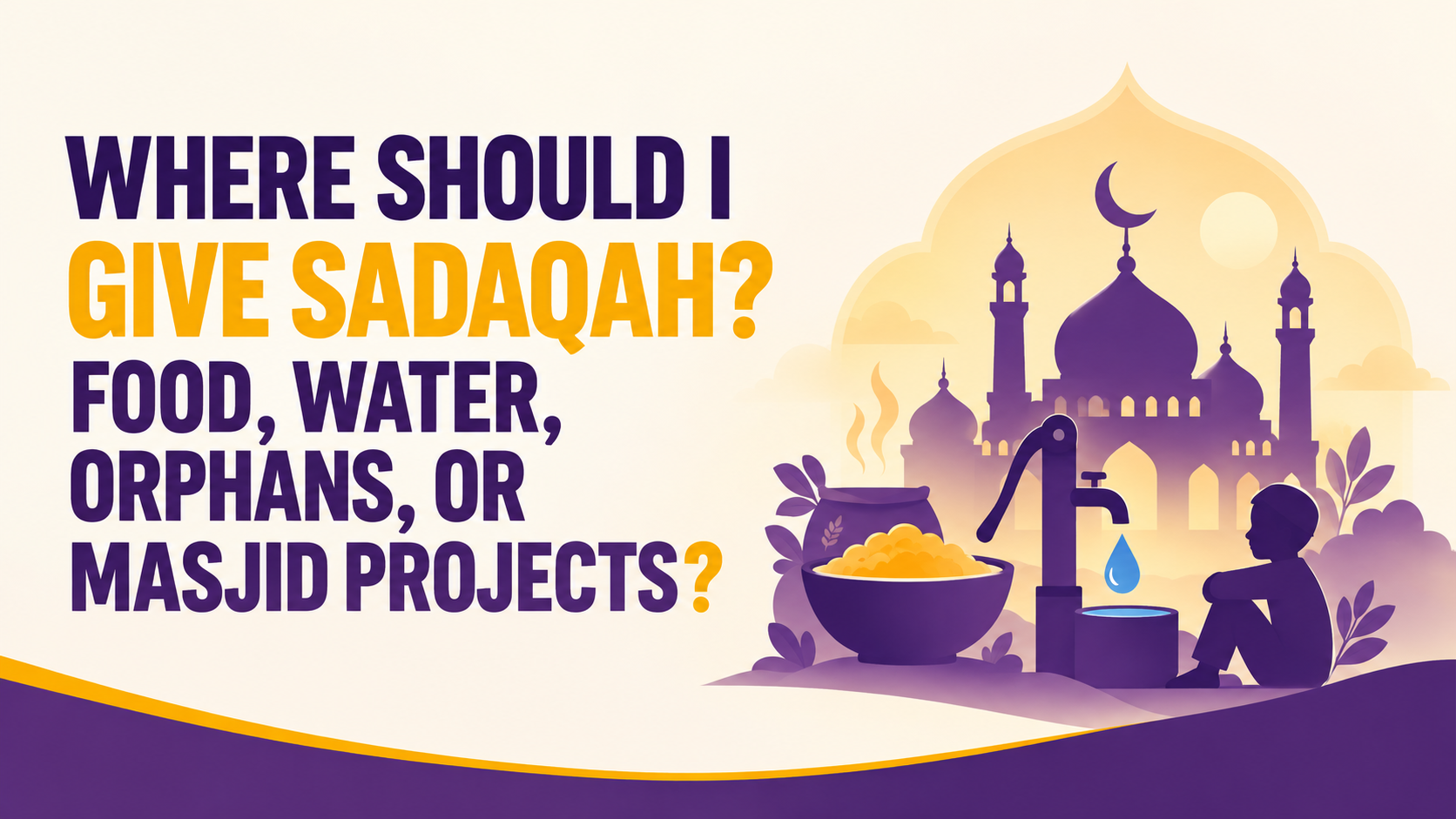
Food, water, orphan care and masjid projects are all valuable forms of Sadaqah. There is no single project that is automatically best for every donor and every moment.
Islamic texts give strong encouragement for each of these causes. Our task is to apply that encouragement with knowledge rather than turn every appeal into a competition.
1. Food: when hunger is immediate
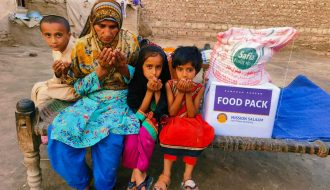
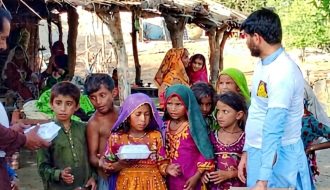
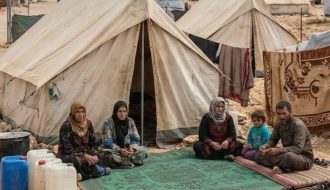
When a person lacks food today, immediacy matters. A meal, food pack or cash assistance can protect health and dignity without waiting for a long construction project.
The Prophet Muhammad ﷺ was asked which qualities of Islam were best. He answered:
“To feed people and greet those whom you know and those whom you do not know.”
(Sahih al-Bukhari 12)
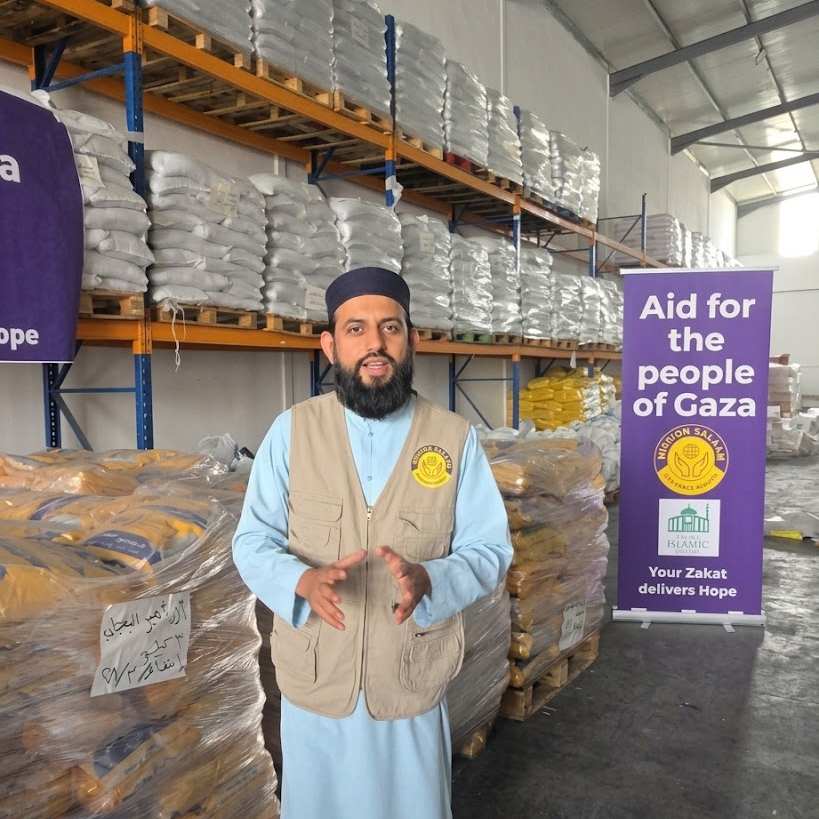
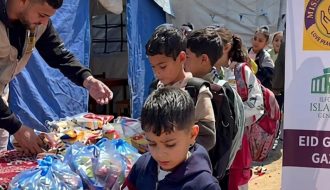
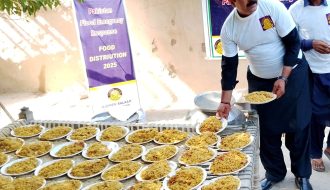
Food may be the clearest choice during displacement, conflict, winter hardship or a local household crisis. Check whether the charity provides cooked meals, food parcels or another form of support, and whether that form suits the context. A repeated food programme can also be supported regularly, even though an individual meal is usually immediate Sadaqah rather than Sadaqah Jariyah.
2. Water: urgent relief and continuing access
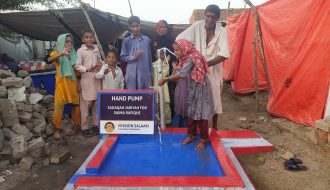
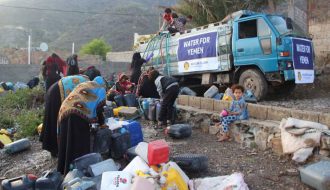
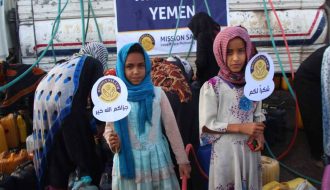
Water projects cover very different activities. Emergency water delivery meets an immediate shortage. A well, hand pump, filtration system or community water point may continue serving people over time if it remains safe and maintained.
Sa’d ibn ‘Ubadah asked the Prophet ﷺ what form of charity was best after his mother died. He replied: “Water.” Sa’d then dug a well for her.
(Sunan Abi Dawud 1681)
The context matters. This hadith gives water a special virtue and directly links a well with charity on behalf of the deceased. It should not be used to claim that water must override food in a famine or medicine in a health emergency.
For a lasting water project, ask who owns the facility, who will test the water and who will repair it. Continuing reward is connected to continuing benefit, not merely to the word “well” on a donation page.
3. Orphan care: committed, protective support
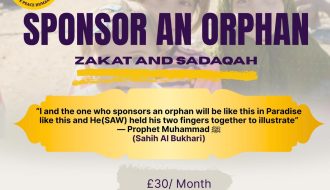
The Prophet ﷺ said: “I and the person who looks after an orphan and provides for him will be in Paradise like this,” bringing his index and middle fingers together.
(Sahih al-Bukhari 6005)
Orphan care should be more than a moving image or a seasonal gift. Good sponsorship may contribute to food, education, healthcare and protection while respecting the child’s privacy and relationship with their surviving family or caregiver.
This cause suits donors ready for regular support. Before committing, check what the sponsorship covers, how long it lasts, what happens if a child’s circumstances change and how safeguarding is managed.
4. Masjid projects: worship, access and community use
The Prophet ﷺ said:
“Whoever built a mosque, intending Allah’s pleasure, Allah would build for him a similar place in Paradise.”
(Sahih al-Bukhari 450)
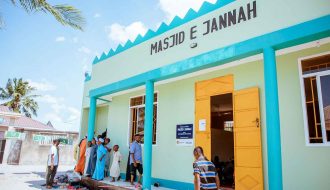
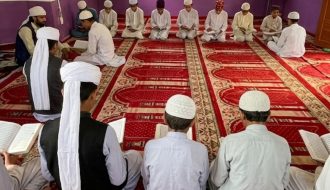
A needed masjid can create space for prayer, learning and community life. The project should still be assessed carefully. Is there a real local need? Is the land secure? Are permissions in place? Is the design safe and accessible? Who will pay for utilities, repairs and leadership after construction?
Restoration can sometimes be more useful than a new building. A donor may also contribute a share rather than fund an entire masjid.
5. How to Decide: Urgency, Fit and Delivery
The same donor may make a different choice at a different time. During a famine, food may come first. Where a village repeatedly loses access to safe water, a maintained water system may address the deeper cause. A donor who can commit each month may be well placed to support orphan care.
This is why there is no useful answer based only on the name of the project. The best choice is tied to the real situation, the likely benefit and the charity’s ability to deliver.
Ask seven questions:
- Which need cannot safely wait?
- Am I seeking immediate relief, continuing benefit or a balance of both?
- Do I have a personal responsibility or reliable knowledge of a particular case?
- Can the project explain what the donation pays for?
- What evidence will show that it was delivered?
- What safeguarding and maintenance arrangements exist?
- What happens if the appeal is fully funded or cannot proceed?
A sensible portfolio may include a regular gift for stable care and a separate amount kept for emergencies. Dividing Sadaqah is permissible; no evidence requires every voluntary gift to go to one category.
6. Choose a trustworthy route
UK donors can check whether an organisation is registered through the relevant charity regulator. Read the appeal rather than relying only on a social-media caption, and understand whether your gift is restricted to one project or may be reallocated.
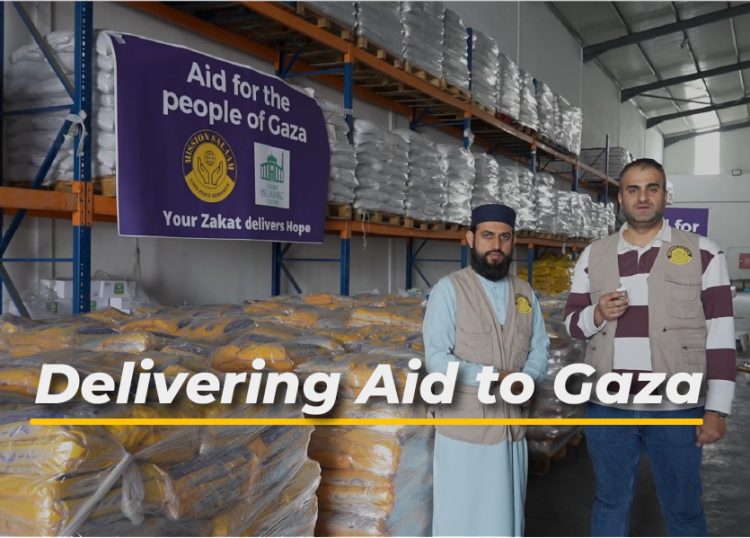
Mission Salaam currently offers separate Million Meals, Food Packs, Safe Water, Orphan Care and Build a Masjid appeals. Its project pages allow a donor to compare immediate support with longer-term work before choosing. Muslim Hands also publishes food, water, sponsorship and masjid options and describes its approach to monitoring and long-term programmes.
The cause matters. So does the route. Give where the need is real, the benefit is clear and the organisation can treat your Sadaqah as the trust it is.