Rabi-ul-Thani comes after Rabi-ul-Awwal in the Islamic calendar. Once the discussions and reminders of the previous month have passed, many Muslims begin looking for the next month's dates and asking whether it has particular religious practices.
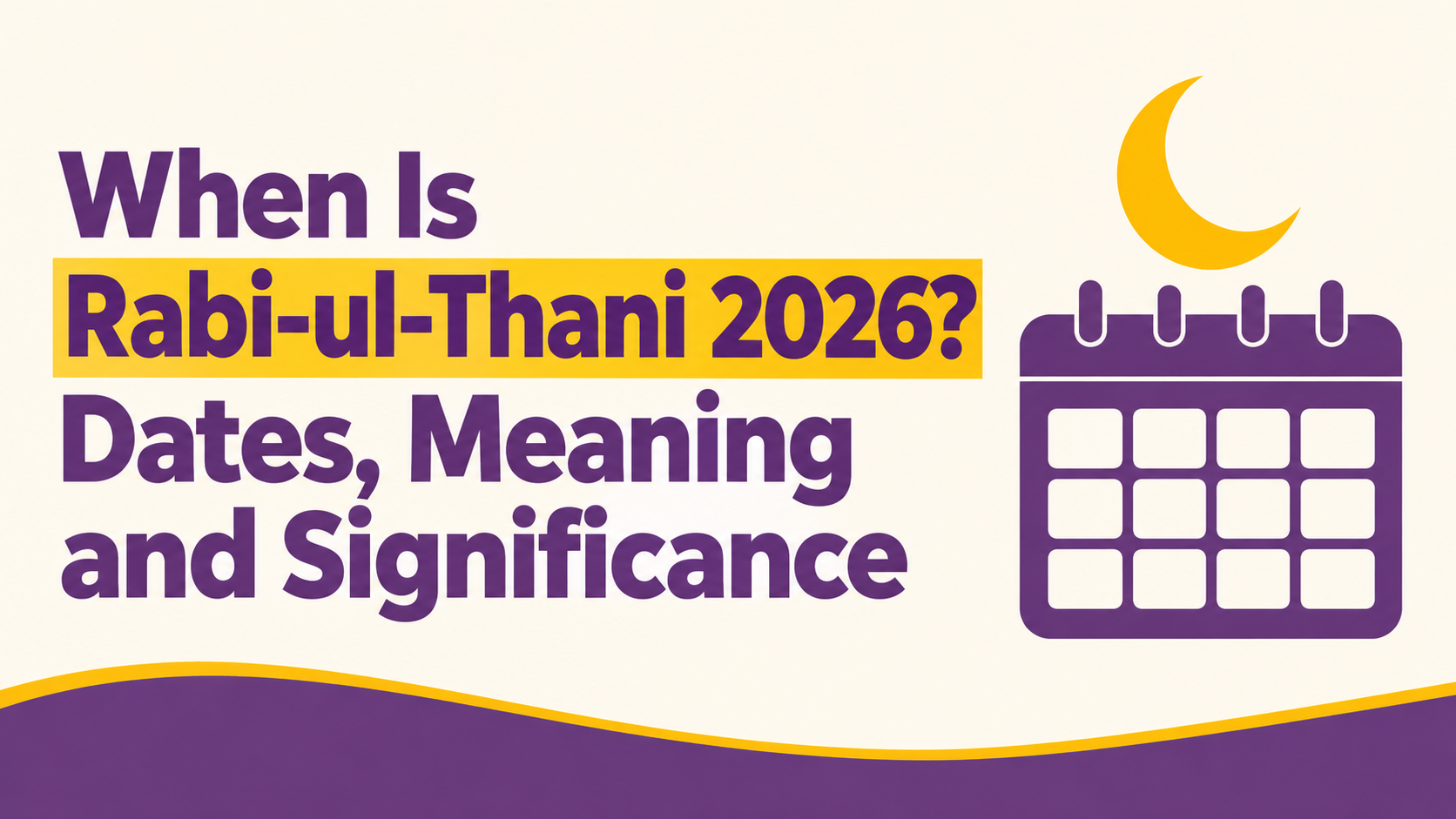
Published Islamic calendars place the expected start of Rabi-ul-Thani 1448 on Saturday 12 September 2026. That date remains subject to the lunar calendar and moon-sighting announcement followed by your community. It should not be treated as a confirmed date for every country or mosque.
Understanding the month involves more than finding it on a calendar. It also means knowing which claims about special worship have evidence, and how ordinary days can be used well without attaching unsupported promises to them.
1. What Is Rabi-ul-Thani?
Rabi-ul-Thani is the fourth month of the Islamic year. It follows Rabi-ul-Awwal and comes before Jumada al-Ula. You may also see it written as Rabi al-Thani, Rabi-us-Sani or Rabi al-Akhir. These names refer to the same month, rather than separate occasions.
The word “Thani” means second, distinguishing it from Rabi-ul-Awwal, the first of the two months named Rabi. Although the names are connected with spring, the Islamic calendar follows the moon. Its months therefore move through the seasons instead of remaining tied to the same weather each year.
This explains why a month that falls in September one year will gradually appear earlier in later Gregorian calendars. When checking an event, look for both the Hijri year and the Gregorian year. A useful-looking calendar image may belong to an earlier year.
2. When Is Rabi-ul-Thani in 2026?
Islamic Relief UK and Muslim Hands Canada publish 12 September 2026 as the expected beginning of Rabi-ul-Thani 1448, with the usual moon-sighting qualification.
If your community follows that start date, the Islamic month begins at sunset on Friday 11 September, with Saturday 12 September as its first daytime date. Islamic dates begin at sunset, which is why an evening announcement and the next day's calendar entry can both refer to the start of the month.
Lunar months have either 29 or 30 days. Their precise beginning and end should be checked with the mosque or recognised calendar authority you normally follow. An advance calendar is useful for planning, but an estimate and a local announcement are not the same thing.
Before arranging a gathering or sharing a date, check:
- Whether the calendar is for 1448 AH and 2026.
- Whether the date is described as expected or confirmed.
- Which country or moon-sighting method it follows.
- Whether your local mosque has issued its own announcement.
Using one clear source also makes planning easier for families. There is little benefit in forwarding several conflicting calendar images without explaining where they came from.
3. Is Rabi-ul-Thani a Sacred Month?
Rabi-ul-Thani is not one of the four sacred months identified in the Sunnah. In Sahih al-Bukhari 3197, the Prophet ﷺ names Dhul-Qa'dah, Dhul-Hijjah, Muharram and Rajab as those four months.
This distinction matters because the phrase “sacred month” has a particular meaning. It should not be added to every Islamic month simply to make a reminder sound more important.
At the same time, a month does not need that classification for prayer, charity, kindness and learning to matter. The five daily prayers remain central, family responsibilities continue, and people still need support.
For someone who became more interested in the Prophet's ﷺ life during Rabi-ul-Awwal, this can be a natural point to continue reading and putting lessons into practice. That is a personal plan for learning, not a special rule attached to Rabi-ul-Thani.
4. Are There Special Prayers or Observances?
The sound texts considered for this guide do not establish a prayer formula, fixed donation amount or particular fasting reward that belongs exclusively to Rabi-ul-Thani.
Some communities hold historical or devotional commemorations during the month. The existence of a local custom should be distinguished from a universal obligation or a practice directly established by an authentic hadith. Questions about a particular gathering should be put to a knowledgeable scholar with its actual details.
Be especially careful with messages promising a precise result for reciting certain words a set number of times on a particular night. A confident caption or attractive design is not a reference.
Ask where the claim comes from, whether the narration is authentic, and whether its wording really refers to this month. General encouragement to pray or give charity does not establish a unique Rabi-ul-Thani reward.
Voluntary practices such as fasting the White Days or Mondays and Thursdays have their own evidence. They can be observed during this month without being described as customs exclusive to it.
5. How Can Families Use the Month Well?
Choose something useful that fits your circumstances. A family might read a short passage about the Prophet's ﷺ character each week, help a relative with an outstanding task, or review how regularly everyone is managing their prayers.
The Prophet ﷺ said:
“There are two blessings that many people are deceived into losing: health and free time.”
Sahih al-Bukhari 6412
This reminder applies throughout the year. It encourages us to recognise opportunities while they are available, without needing to wait for a special occasion.
Keep a household plan small enough to follow. Ten minutes of shared reading may be more manageable than announcing a long programme that everyone finds difficult. Children can take part through questions, helping at home or choosing a simple act of kindness.
It can also help to check on someone quietly. A visit, a useful conversation or help with an errand may answer a real need. There is no requirement to turn every good intention into a public challenge or a social media update.
6. Final Takeaway
Rabi-ul-Thani 1448 is expected in published calendars to begin on 12 September 2026, subject to the lunar authority your community follows. It is the fourth Islamic month and is not one of the four sacred months.
Use reliable sources for its dates and for any religious claims shared about it. The month offers ordinary opportunities to worship, learn and care for others. Those opportunities are valuable without adding a special ritual or an unsupported promise of reward.