113 CHESTER AVENUE LUTON LU4 9SQ
020 4509 9247
info@missionsalaam.uk
1199236

Rabi-ul-Awwal is the third month of the Islamic Hijri calendar, following Muharram and Safar. It holds particular historical importance because several major events from the life of Prophet Muhammad ﷺ are associated with it.
The Prophet ﷺ was born during Rabi-ul-Awwal, his Hijrah reached an important stage with his arrival near Madinah during the month, and his passing is also historically placed in Rabi-ul-Awwal.
For Muslims today, this naturally makes the month a time to learn more about the Prophet ﷺ, reflect on his Seerah, send salawat upon him, and consider how his teachings can be followed more closely.
Rabi-ul-Awwal is also approached differently across Muslim communities. Many commemorate the Prophet’s ﷺ birth through gatherings, Seerah, salawat, charity, and other acts of remembrance. Other Muslims do not observe a specific celebration, holding that an annual religious commemoration was not established by the Prophet ﷺ or his Companions. This is a longstanding area of scholarly disagreement, and it is helpful to distinguish that discussion from the historical facts about the month itself.
In the UK, 1 Rabi-ul-Awwal 1448 is expected to fall on Friday, 14 August 2026. The 12th of Rabi-ul-Awwal is expected on Tuesday, 25 August 2026. These dates remain subject to moon sighting and may differ between countries and Muslim communities depending on the method used to establish the beginning of a lunar month.
Rabi-ul-Awwal is the third month of the Hijri calendar. Unlike Ramadan or Dhul Hijjah, there is no obligatory act of worship prescribed specifically for the month as a whole. Its significance instead comes largely from its connection to important events in the life of the Prophet Muhammad ﷺ.
The Prophet Muhammad ﷺ was born in Makkah during the Year of the Elephant. Historical sources widely place his birth in Rabi-ul-Awwal, although scholars and historians have differed over the precise numerical date.
One detail is established directly through an authentic hadith: he was born on a Monday. When the Prophet ﷺ was asked about fasting on Monday, he said:
“It was the day on which I was born, on which I was commissioned with prophethood or revelation was sent to me.”
(Sahih Muslim 1162b)
The 12th of Rabi-ul-Awwal became the most widely recognised date for his birth across many Muslim communities, but other dates have also been reported by scholars. It is therefore more accurate to say that his birth occurred in Rabi-ul-Awwal and on a Monday, while acknowledging disagreement over the exact date.
Muslim scholars have historically differed over formally commemorating the Prophet’s ﷺ birth.
Some scholars permit or encourage Mawlid gatherings when they consist of permissible acts such as studying the Seerah, sending salawat, reciting Qur’an, feeding people, giving charity, and expressing gratitude to Allah. Among the evidence cited by scholars who permit it is the hadith above: the Prophet ﷺ fasted on Monday and specifically mentioned that it was the day on which he was born. Egypt’s Dar al-Ifta, for example, adopts this permissive position.
Other scholars argue that although loving the Prophet ﷺ and being grateful for his birth are unquestionably important, establishing his birthday as a recurring religious celebration was not practised by the Prophet ﷺ, his Companions, or the earliest generations. They therefore consider Mawlid an innovation and encourage Muslims instead to express their love through following his Sunnah and studying his life throughout the year.
The disagreement concerns how his birth should be commemorated, rather than whether Muslims should love, honour, and learn about the Prophet ﷺ.
Rabi-ul-Awwal is also connected directly to the Hijrah, the Prophet’s ﷺ migration from Makkah to Madinah.
After years of persecution in Makkah, the Prophet ﷺ and Abu Bakr رضي الله عنه undertook the journey that would transform the future of the Muslim community.
Sahih al-Bukhari records the Prophet’s ﷺ arrival:
“The Prophet ﷺ turned with them to the right and alighted at the quarters of Bani ‘Amr bin ‘Auf, and this was on Monday in the month of Rabi-ul-Awal.”
(Sahih al-Bukhari 3906)
He remained there for several nights and established the mosque of Quba before continuing towards the area where his mosque in Madinah would eventually be built.
The Hijrah became a turning point in Islamic history. Muslims were able to establish a community in Madinah in which Islamic worship and society could develop openly.
An important distinction is that although the Hijri calendar is based upon the year of the Hijrah, the Prophet ﷺ did not arrive in Madinah on 1 Muharram. The calendar was formally organised later during the caliphate of Umar ibn al-Khattab رضي الله عنه, with Muharram serving as the first month.
Rabi-ul-Awwal is also historically associated with the passing of the Prophet Muhammad ﷺ in 11 AH.
As with his birth, discussions exist regarding the exact numerical date. However, an authentic narration from Aisha رضي الله عنها establishes the day of the week. When Abu Bakr رضي الله عنه asked her on which day the Prophet ﷺ had died, she replied:
“He died on Monday.”
(Sahih al-Bukhari 1387)
The 12th of Rabi-ul-Awwal is the most commonly cited historical date for his passing, although scholars have also discussed other dates within the month. It is therefore appropriate to distinguish between his death on a Monday, which is established by authentic hadith, and the precise numerical date reported through historical chronology.
His passing was one of the most difficult moments faced by the Companions. Yet the message he ﷺ had delivered remained. The Qur’an, his Sunnah, and the community he had helped establish continued after his death.
Rabi-ul-Awwal therefore carries several major connections to his life: his birth, an important stage of his Hijrah, and his passing.
There is no obligatory act of worship prescribed specifically for Rabi-ul-Awwal as a month.
What Muslims can unquestionably agree upon, regardless of their position on Mawlid, is the importance of learning about the Prophet ﷺ, loving him, following his teachings, and sending peace and blessings upon him.
Learning about the Prophet ﷺ should ultimately lead to following him. Allah says:
“Say, ˹O Prophet,˺ ‘If you ˹sincerely˺ love Allah, then follow me; Allah will love you and forgive your sins. For Allah is All-Forgiving, Most Merciful.'”
(Qur’an 3:31)
The Seerah provides practical examples of how the Prophet ﷺ worshipped, treated his family, responded to hardship, cared for vulnerable people, dealt with opponents, showed mercy, and served his community.
Rabi-ul-Awwal can therefore become an opportunity to begin studying his life more closely — but following his example is not something restricted to one month.
Sending blessings upon the Prophet ﷺ is directly commanded in the Qur’an:
“Indeed, Allah showers His blessings upon the Prophet, and His angels pray for him. O believers! Invoke Allah’s blessings upon him, and salute him with worthy greetings of peace.”
(Qur’an 33:56)
Some Muslims increase their salawat during Rabi-ul-Awwal as part of their commemoration of the Prophet ﷺ. Others do not attach the practice specifically to the month. In either case, sending salawat itself is an established act of worship throughout the year.
Learning the Seerah, following the Sunnah, sending salawat, giving charity, helping others, improving one’s character, and strengthening acts of worship are all meaningful ways of responding to what the Prophet ﷺ taught.
For Muslims who commemorate Mawlid, these actions may form part of their Rabi-ul-Awwal gatherings. For those who do not observe Mawlid, the same established acts can be practised without attaching them to a particular celebration.
The shared principle is that love for the Prophet ﷺ should extend beyond a single date. It should influence how a we worships Allah, treats other people, and lives throughout the year.
Rabi-ul-Awwal 1448 is expected to begin on 14 August 2026 in the UK, with 12 Rabi-ul-Awwal expected on 25 August, subject to moon sighting.
The month is closely connected to the life of Prophet Muhammad ﷺ. Authentic hadith establishes that he was born on a Monday, arrived at Bani ‘Amr ibn ‘Awf near Madinah on a Monday in Rabi-ul-Awwal, and later passed away on a Monday.
Scholars differ over whether his birth should be formally commemorated through Mawlid, and the precise numerical date of his birth is historically disputed. Those differences should not obscure what is firmly established: Muslims are commanded to follow the Prophet ﷺ, send blessings upon him, learn from his example, and carry his teachings into their everyday lives.
Together, we can create a world where the message of love from Islam resonates in every heart, transcending barriers and building a harmonious global community.
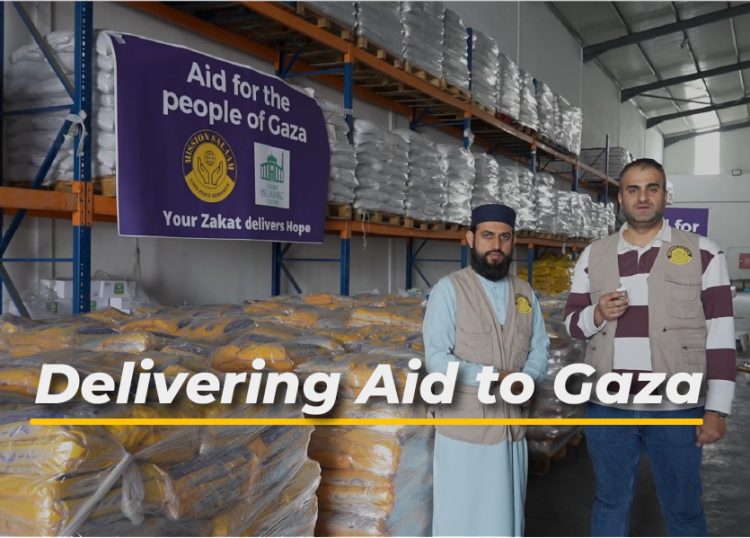
While a ceasefire has been declared, the dire conditions continue, and we thus urge our donors to continue their generous support. This aid is not only critical for immediate survival.
DONATE ➜
You can restore a masjid in Africa with much needed works so that it can be prayed in safely once again.
DONATE ➜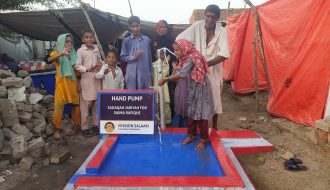
We have delivered over 50 Handpumps in just the last 2 months and have reported back to our donors
DONATE ➜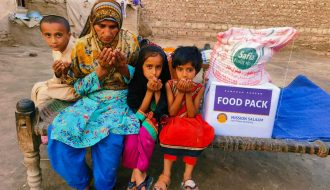
Our "Feed the Hungry" initiative aims to provide essential sustenance and nourishment to vulnerable communities facing food insecurity.
DONATE ➜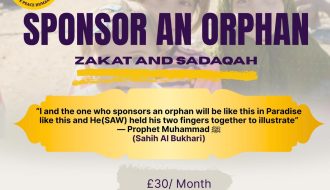
At Mission Salaam, we believe every child deserves a chance to live with dignity, hope, and opportunity.
DONATE ➜
Business startup funds for needy people are designed to provide accessible capital, mentorship, and resources to help underprivileged entrepreneurs launch sustainable ventures.
DONATE ➜
There are thousands of widows who need a home for themselves to save them from being abused
DONATE ➜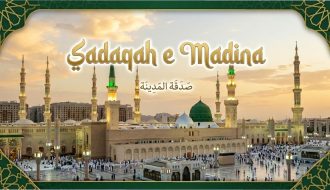
Your contribution directly supports the students of Islam to spread the beautiful teachings of Islam globally.
DONATE ➜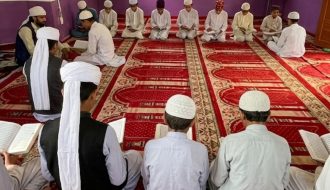
The Prophet (PBUH) said: “Whoever recites the Qur’an and learns it and acts according to it will be given a crown of light to wear on the Day of Judgement.”
DONATE ➜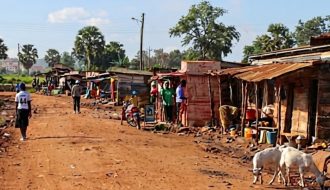
In Uganda, female-headed households experience higher rates of multidimensional poverty (49%) compared to male-headed households (39%).
DONATE ➜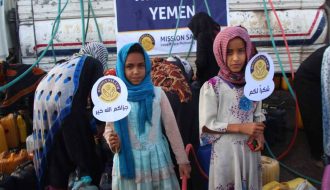
More than 11 million children are in need of one or more forms of humanitarian assistance says Unicef.
DONATE ➜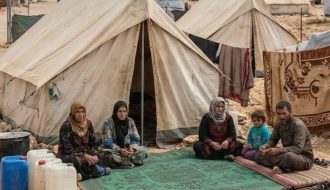
Help refugees from Gaza who are freezing and hungry right now, awaiting your aid.
DONATE ➜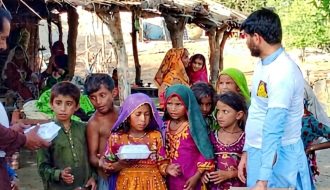
Hundreds killed as floods ravage north Pakistan. Your donation can save a family from this horrible situation.
DONATE ➜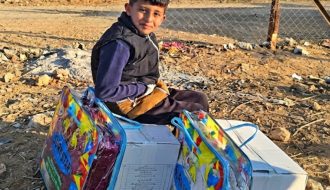
Pakistan is highly susceptible to climate change impacts, including harsh winters that disproportionately affect marginalized communities.
DONATE ➜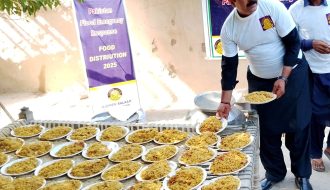
Simply providing nutritious hot cooked meals (£10 for 25 meals), helps to fill stomachs, warm hearts, and relieve pressure on families, and it sows the seeds of hope.
DONATE ➜
By providing a new Muslim with the tools to practice their faith, you are helping preserve the Ummah in Africa.
DONATE ➜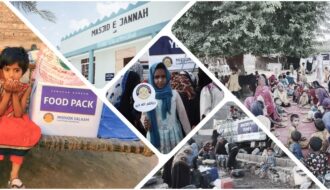
Set up a small weekly Sadaqah and it will be given every Friday — the most blessed day of the week — even when life is busy. From £2 a week, your consistency helps Mission Salaam keep serving families in need.
DONATE ➜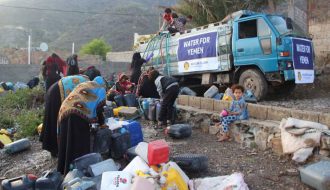
Your £5 or £10 Direct Debit can do miracles and does not bother your finances
DONATE ➜Blogs
We'd like to keep you updated about our projects and fundraising activities. Please confirm if you are happy for Mission Salaam to contact you via:

*I would like Mission Salaam to treat all donations I have made in the past, this donation and all my future donations until I notify otherwise as Gift Aid donations. I am a UK taxpayer and understand that if I pay less Income Tax and/or Capital Gains Tax that the amount of Gift Aid claimed on all my donations I that tax year it is my responsibility to pay any difference. Please inform Mission Salaam if you want to cancel the declaration, change your name or address or no longer pay sufficient tax. The Gift Aid amount claimed will be used towards fundraising/administrative costs as well as our Where Most Needed fund to save and transform more lives.