After someone dies, grief often creates a strong wish to do something useful in their name. Islam gives that wish a sound direction: you may give charity from your own wealth and ask Allah to grant its reward to the person who has passed away.
If the benefit continues, the gift may be Sadaqah Jariyah. It can honour a loved one quietly, help people in a real way and become part of the du’a you continue making for them.
1. Can charity benefit someone after death?
Yes. A man told the Prophet Muhammad ﷺ that his mother had died suddenly. He believed she would have given charity if she had been able to speak. He asked whether she would receive reward if he gave Sadaqah on her behalf. The Prophet ﷺ answered yes.
(Sahih al-Bukhari 1388; Sahih Muslim 1004a)
The report is direct and sound. It does not require the deceased to have left instructions, and it does not limit the giver to a son or daughter. A relative, friend or another Muslim may give from their own money and intend the reward for the deceased.
2. Two hadith, two related principles
Another well-known hadith says:
“When a man dies, his acts come to an end, but three: recurring charity, or knowledge by which people benefit, or a pious child who prays for him.”
(Sahih Muslim 1631)
The two reports make related but different points.
- The first confirms that charity given by a living person can benefit the deceased.
- The second explains that certain benefits established during a person’s life can continue after their death.
Together, they give a strong basis for donating Sadaqah Jariyah on behalf of someone who has died. We should not reduce the second hadith to fundraising alone: beneficial knowledge and a righteous child’s sincere du’a are also explicitly named.
3. What can you donate for a loved one?
Choose something needed, suitable and likely to remain useful.
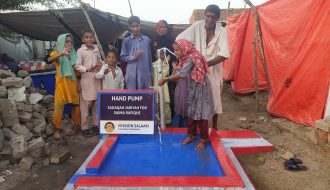
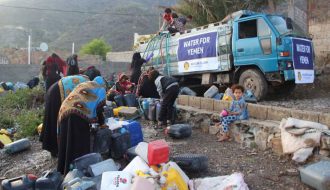
Water. Sa’d ibn ‘Ubadah asked what charity was best after his mother died. The Prophet ﷺ replied, “Water,” so Sa’d dug a well for her.
(Sunan Abi Dawud 1681)
A maintained well, pump or filtration system can therefore be a particularly fitting gift.
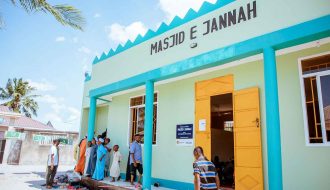
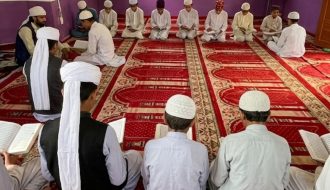
A needed masjid or restoration. The Prophet ﷺ promised a house in Paradise to the person who builds a mosque for Allah.
(Sahih al-Bukhari 450)
A contribution or share in a well-managed project may support continuing worship.
Beneficial knowledge. Useful books, accessible learning resources, teacher support or a sound educational facility may continue helping people. Check the quality of the content and the safeguarding of learners.
Healthcare or mobility assets. Reusable medical equipment, a clinic facility or a mobility aid may provide repeated benefit when the charity has a clear maintenance and allocation plan.
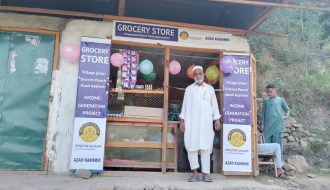
Livelihood or productive assets. Tools, livestock, trees or business equipment may support a household over time. The project should be designed around the recipient’s skills and local circumstances.
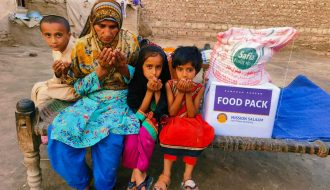
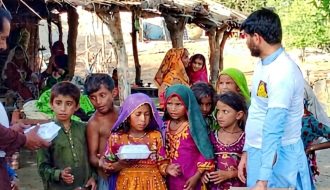
You may also give immediate Sadaqah, such as meals or emergency aid. It does not become less meaningful simply because its direct benefit is shorter.
4. Immediate Sadaqah or Sadaqah Jariyah?
The best choice may depend on urgency. If families need food tonight, immediate relief should not be delayed because a donor prefers a permanent monument. If a community has repeated water shortages, a reliable long-term system may address the deeper problem.
Some donors divide the gift: one part meets an urgent need and another supports ongoing benefit. Islam does not require the whole donation to use one model.
Remember that “ongoing” describes real use. A pump that breaks without repair or a building that remains empty will not keep benefiting people merely because the appeal called it Sadaqah Jariyah.
5. Give from your money or from the estate?
When you give from your own money, you may make the intention for the deceased and donate.
For an estate donation, obtain advice from a qualified scholar familiar with the school being followed and a UK solicitor experienced in wills and probate. If adult heirs later choose to give from what they lawfully inherit, that is their own voluntary charity.
6. Intention and choosing a reliable project
No public ceremony or plaque is required. Name the person in your heart, give for Allah’s sake and make du’a for their forgiveness and mercy.
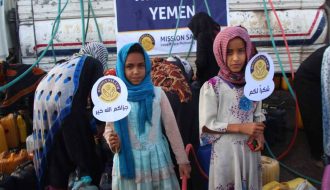
Ask the charity how the project is selected, when it is expected to be completed, who will maintain it and what evidence donors receive. Mission Salaam’s current Safe Water and Build a Masjid appeals are two possible routes to compare. Human Appeal also offers productive olive-tree projects that may be dedicated to a loved one. Select by credible need and delivery, not by the promise of a certificate.
7. Charity can accompany grief without becoming a burden
Family members may also choose different good deeds. One person may give money, another may teach something useful and another may make regular du’a. There is no need to compare these acts or turn grief into a fundraising target.
What matters is sincerity, affordability and real benefit. A quiet gift can honour a loved one without making their name part of a public campaign.
Families should not feel pressured to raise a large sum immediately after a death. A small charity is valid. A pooled family gift is valid. Continuing du’a is itself named in the hadith.
Give what is affordable, avoid debt and do not measure love by the size of the project. The most fitting memorial is one offered sincerely to Allah and translated into genuine benefit for His creation.