When people think about Sadaqah Jariyah, they often picture a well or a masjid. Education can also have lasting value. A lesson may help someone for years, and what they learn may later benefit their family, pupils or wider community.
Supporting education can therefore be a way of seeking ongoing reward. However, it is important to understand what is being supported and how the benefit continues. A project does not gain a guaranteed spiritual outcome simply because its fundraising page uses the words “Sadaqah Jariyah”.
For donors, the useful questions are practical as well as religious: what will a student learn, what help do they need, and how will the programme support them responsibly?
1. How Can Education Bring Ongoing Reward?
In Sahih Muslim 1631, the Prophet ﷺ explains that a person's deeds cease at death except for three continuing sources: ongoing charity, beneficial knowledge and a righteous child who prays for them. This is a summary of the narration's meaning.
The hadith names continuing charity and beneficial knowledge separately. Both help us understand why supporting useful learning can have an effect beyond the moment a donation is made.
A teacher may pass on knowledge that students continue to use. A book may remain available to different readers. A supported student may later teach others. These are possible ways that benefit continues, rather than promises that every donation will produce the same result.
The word “beneficial” matters. The value lies in what is taught and how it helps, not simply in the existence of a classroom or a certificate. Donors should care about the quality, suitability and responsible delivery of a programme.
We can hope for lasting reward while leaving its acceptance and measure to Allah. There is no need to calculate an invented number of rewards for every lesson, page or future pupil.
2. What Does Sponsoring a Student Support?
Student sponsorship can cover different needs. Depending on the programme, it may contribute to teaching, books, learning materials, meals or a safe place to study. Never assume that all of these are included simply because another charity's package provides them.
Muslim Hands UK and Muslim Charity both offer Hafiz sponsorship programmes, but donors should read the details of the particular scheme they choose. The length, cost and reporting arrangements may differ.
Practical support around learning can be important. A child who lacks the materials needed for class may struggle to participate. A programme may also need to pay teachers consistently or maintain a suitable learning space.
These costs are part of delivering education. They should not be dismissed as unimportant because they are less visible than a new building. At the same time, donors should ask what their contribution is intended to fund and whether it supports one student, a shared programme or a wider education budget.
Clear explanations help prevent misunderstandings on both sides. They also make it easier to decide whether a monthly commitment is affordable and suitable.
3. Is Quran Teaching Part of This?
Teaching and learning the Qur'an have a clear place in the Sunnah. The Prophet ﷺ said:
“The best among you (Muslims) are those who learn the Qur'an and teach it.”
Sahih al-Bukhari 5027
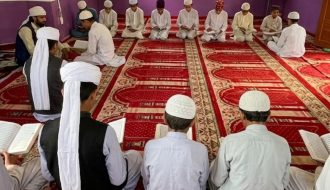
Supporting Quran education can help provide access to teachers and the time and resources needed to learn. A Hifz programme focuses on memorisation, but donors can also ask how students are supported with revision, understanding and their wider welfare.
A child should not be treated as a fundraising target who must finish within a donor's preferred deadline. Learning progresses at different speeds, and a responsible programme should be able to explain its approach without making unrealistic promises.
The hadith praises learning and teaching the Qur'an. It does not give a sponsor permission to claim that they automatically receive every reward of a student, nor does it establish a guaranteed personal outcome for a particular donation amount.
Encouragement is strongest when it stays close to what the evidence actually says. There is already good reason to value Quran learning without adding dramatic claims.
4. What Should You Check Before Donating?
Ask the charity clear questions about the programme:
- What teaching and practical support does the sponsorship cover?
- Who supervises the teachers and monitors the quality of learning?
- What safeguarding arrangements protect students?
- What happens if a student leaves, moves or completes the programme?
- What updates can donors expect without compromising a child's privacy?
The answers may differ between organisations. A scheme using pooled funds may operate differently from one matching donors with individual students. Neither description alone tells you everything about the programme's quality.
Be careful with promises of direct contact, personal photographs or detailed student information. Accountability matters, but it should be provided in ways that protect children. Donors do not need unrestricted access to a student's life to understand how a programme works.
If you intend to use Zakat rather than voluntary Sadaqah, ask a separate eligibility question. An educational purpose does not by itself establish that every cost or payment arrangement fulfils Zakat.
5. Can Smaller Contributions Help?
You do not have to fund an entire school to support education. Depending on the charity's arrangements, a smaller donation may contribute towards a shared programme or an affordable sponsorship commitment.
As checked in September 2026, Mission Salaam's Sponsor a Hafiz appeal lists £20 monthly, £240 for a year and £720 for its full Hifz option. The page describes support including teachers, meals, materials and a sheltered learning environment. Check the live page for current amounts and ask the charity about programme details before committing.
Those figures describe the advertised options; they should not be treated as a promise that every student completes their learning on an identical schedule.
Choose an amount that fits your responsibilities. If you can support a programme only once, ask whether one-off contributions are accepted. If you choose monthly giving, review the commitment when your circumstances change rather than allowing an unaffordable promise to become a burden.
6. Final Takeaway
Education can support continuing benefit through useful knowledge, teaching and learning opportunities. The hadith about beneficial knowledge gives a sound foundation for valuing that lasting effect.
Choose a programme with clear aims, suitable teaching and responsible care for students. Ask how the support works, give within your means and hope for Allah's acceptance. The most meaningful educational legacy begins with real benefit for the learner.