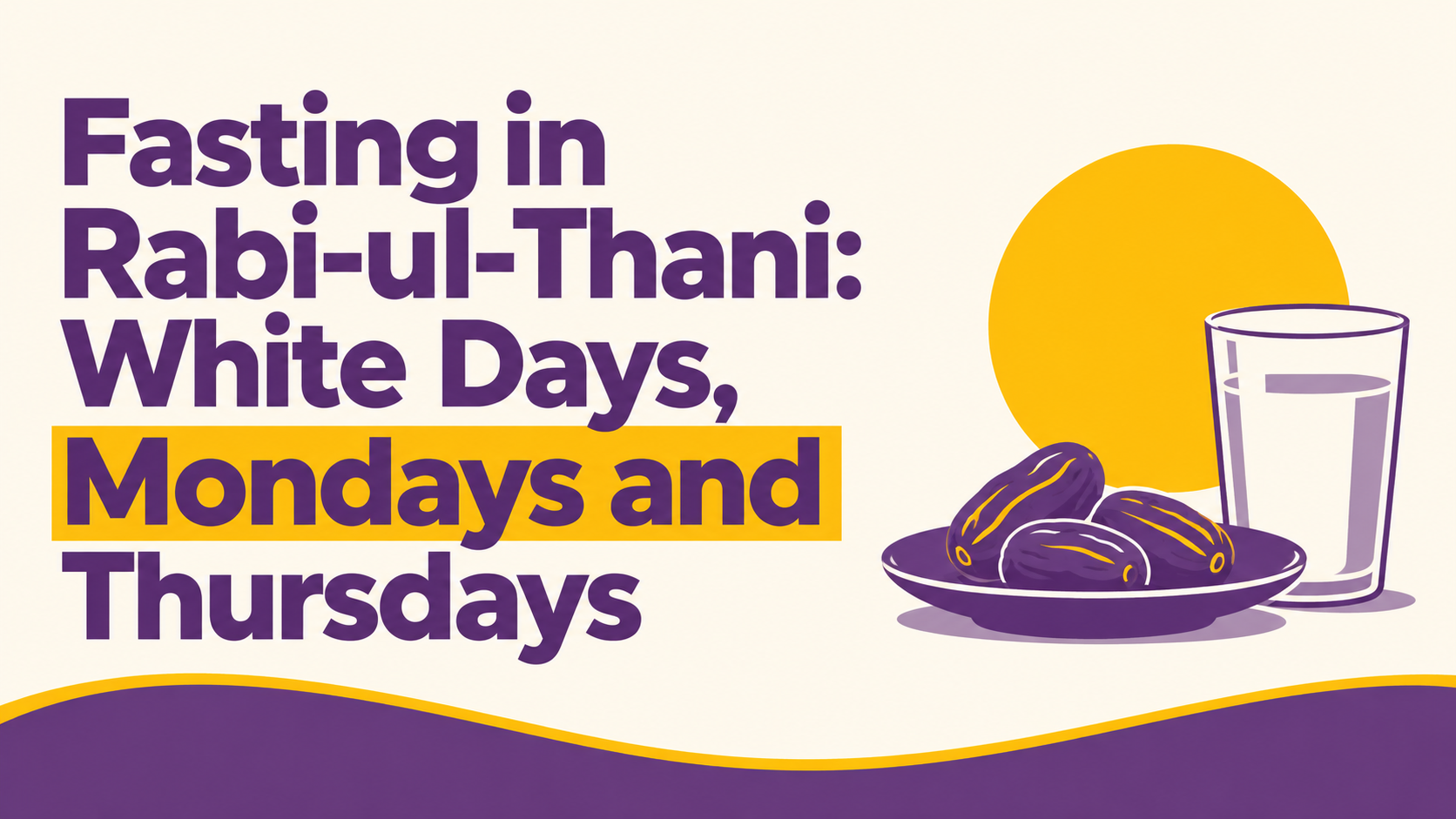
Can you fast during Rabi-ul-Thani? Yes. The established voluntary fasts of the Islamic year can be observed during this month, including the White Days and Mondays and Thursdays.
The important distinction is why a day is being chosen. These practices have evidence in the Sunnah, but they are not unique to Rabi-ul-Thani. There is no additional obligatory fast simply because this month has arrived.
For someone hoping to begin voluntary fasting, a clear and manageable plan is helpful. Understanding the lunar dates, choosing a suitable schedule and recognising personal responsibilities will make that plan easier to follow.
1. Is Fasting in Rabi-ul-Thani Recommended?
The general Sunnah of voluntary fasting applies during Rabi-ul-Thani. Abu Hurayrah reported that the Prophet ﷺ advised him to fast three days each month, alongside other acts of worship. This is recorded in Sahih al-Bukhari 1981.
The wording refers to each month. It does not single out Rabi-ul-Thani or establish a special fast on its first day, last day or another date without separate evidence.
This matters when reading seasonal reminders online. A message may begin with an authentic hadith about fasting, then attach an extra promise to a particular month. The authentic opening does not automatically support the added claim.
You can follow a recognised practice with confidence while being careful about those additions. There is no need to describe an ordinary voluntary fast as a once-a-year opportunity for it to have value.
If you have outstanding obligatory fasts or questions about combining intentions, ask a qualified scholar about your circumstances before choosing a schedule. The details are separate from the general encouragement to fast voluntarily.
2. What Are the White Days?
The White Days, known as Ayyam al-Bid, are the 13th, 14th and 15th of the Islamic lunar month. Their name is associated with the bright nights around the full moon.
The Prophet ﷺ said:
“O Abu Dharr! When you fast three days out of a month, then fast the thirteenth, fourteenth, and fifteenth.”
Jami at-Tirmidhi 761 — graded hasan
These are Hijri dates. They do not mean the 13th, 14th and 15th of September, October or any other Gregorian month.
The distinction between three monthly fasts generally and these particular dates is useful. The Sunnah encourages three days each month, while this narration identifies the White Days as a recommended choice. Someone who cannot manage those dates should not assume that every other monthly opportunity has disappeared.
Sahih Muslim 1159a explains the reward of the regular three-day practice through the tenfold reward for good deeds. It should not be turned into a claim that fasting three days in Rabi-ul-Thani alone equals a lifetime of fasting regardless of what follows.
3. Can You Fast on Mondays and Thursdays?
Mondays and Thursdays provide another established voluntary pattern. The Prophet ﷺ said:
“Deeds are presented on Monday and Thursday, and I love that my deeds be presented while I am fasting.”
Jami at-Tirmidhi 747 — graded hasan
These fasts are identified by the day of the week, so their dates are simpler to find than the White Days. They can be observed during Rabi-ul-Thani as part of a practice followed across the year.
You do not need to begin with every available voluntary day. Think about work, caring responsibilities and how you will maintain your obligatory worship. A demanding plan can become difficult if it has been made without considering daily life.
For example, someone might begin with a suitable Monday and review how it fits their routine. Another person may find the three monthly days easier to plan around. These are practical choices, not a ranking of people's sincerity.
If a White Day falls on a Monday or Thursday, it is still one day of fasting. Questions about multiple intentions or a particular expected reward can be discussed with a scholar rather than answered through assumptions.
4. How Do You Find the Correct Dates?
Use the lunar calendar followed by your local mosque to identify the White Days. Then use the appropriate local prayer timetable for the daily fasting times.
The two sources answer different questions. The calendar tells you which date it is. The prayer timetable tells you when Fajr and Maghrib occur where you live. A timetable from another city may not give the right times for your location.
For planning, remember:
- Check the Hijri month and year, not only the Gregorian date.
- Look for local moon-sighting updates where these affect your calendar.
- Confirm the fasting times for your own location.
- Avoid relying on an undated screenshot forwarded in a group chat.
Although an Islamic date begins at sunset, the day's fast runs from dawn to sunset. Keeping those ideas separate helps prevent confusion when a mosque announces the new month in the evening.
5. What If You Cannot Fast?
Voluntary fasting should not be approached through pressure or guilt. Someone who has not begun an optional White Day fast does not owe a payment simply because that opportunity passes.
This is different from the rules concerning missed Ramadan fasts. Fidya has particular conditions; it is not a general fee for every voluntary fast a person does not undertake.
There is also a distinction between not starting a voluntary fast and breaking one already begun. The latter has school-level rulings, so seek advice rather than applying a general statement to every situation.
If you are ill, pregnant, breastfeeding, taking medication or uncertain about the effect of fasting, obtain appropriate medical advice and religious guidance. Do not change prescribed treatment to fit a voluntary timetable without speaking to the clinician responsible for your care.
Prayer, remembrance, learning and helping others remain available according to your ability. Giving charity can be a good deed in its own right, but it should not be advertised as an automatic replacement that purchases the exact reward of an unobserved fast.
6. Final Takeaway
Rabi-ul-Thani provides an opportunity to follow the established Sunnah of voluntary fasting. The White Days and Mondays and Thursdays have direct evidence; a special fasting programme unique to this month needs evidence of its own.
Check your local dates, choose a realistic practice and ask for advice where health or religious obligations require it. A clear understanding will help you worship without relying on exaggerated claims or unnecessary pressure.