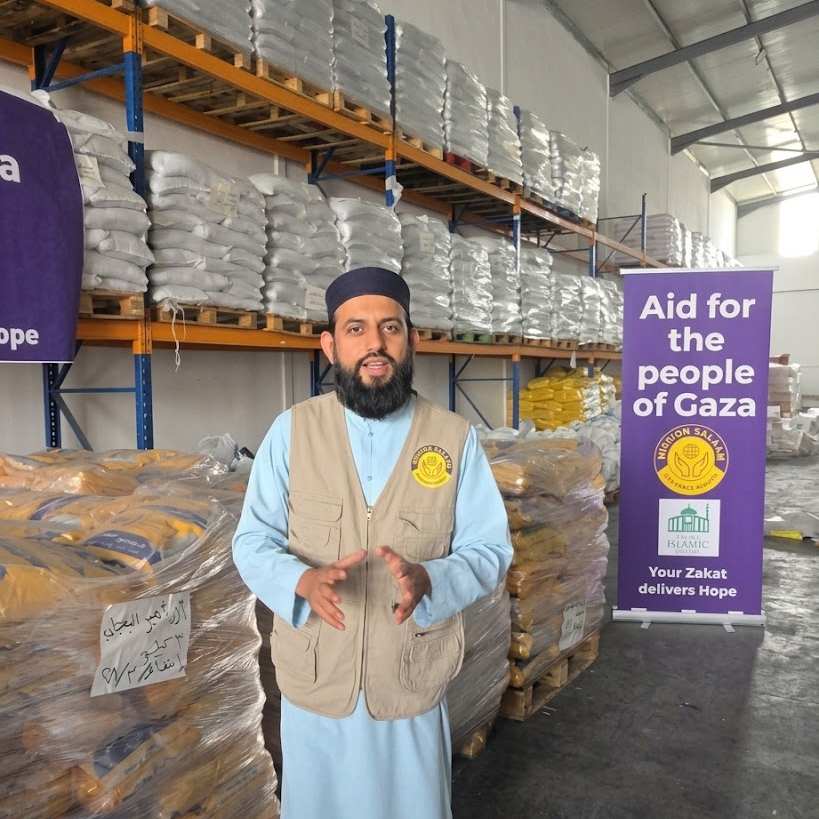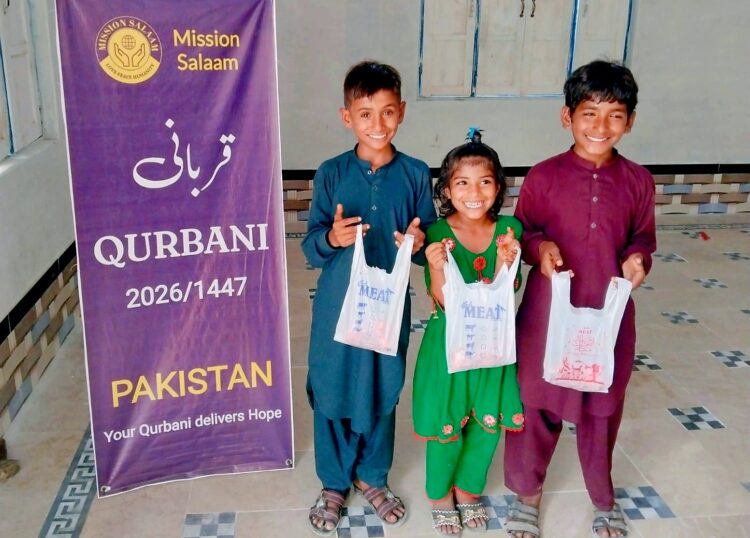

Yes. Zakat can be given to eligible recipients abroad according to recognised scholarly opinions, particularly when there is greater need, a humanitarian emergency or an eligible relative who requires support.
At the same time, Islamic sources give real weight to local distribution. The choice should not be reduced to a competition between “local” and “overseas.” It requires an honest assessment of eligibility, urgency, family ties and the reliability of the distribution route.
1. Why Local Zakat Usually Comes First
Local priority has a practical wisdom. People may live close to a family facing rent arrears, food shortage or debt and still assume that serious poverty exists only overseas. Giving some Zakat locally helps a community notice hardship that is easy to miss.
It can also make support faster. A local organisation may understand housing costs, benefit delays and the documents needed to check a case. This does not mean every local claim is greater than every overseas claim. It explains why local need should be considered before it is passed over.
When the Prophet Muhammad ﷺ sent Mu’adh ibn Jabal to Yemen, he instructed him to tell its people that Allah had made Zakat obligatory,
“to be taken from the rich among them and given to the poor among them.”
(Sahih al-Bukhari 1496)
Many scholars understand this as evidence that Zakat should normally begin with the community in which it is collected. Local giving allows Muslims to recognise hardship close to them, strengthen community responsibility and respond to people who may otherwise remain unseen.
For Muslims in Britain, this matters. Poverty, debt, homelessness, domestic crisis and refugee hardship also exist in the UK. Overseas need should not make local hardship invisible.
2. When sending Zakat abroad is justified
Local priority does not mean that national borders become an absolute barrier.
Recognised reasons for sending Zakat abroad include:
- People elsewhere face more severe or urgent need.
- War, displacement, famine or disaster has created an emergency.
- An eligible relative abroad requires support.
- Local eligible need is already adequately served.
- A trusted organisation can reach a group that has little other assistance.
The Qur’anic categories of Zakat in Surah al-Tawbah identify who may receive Zakat. They do not state that recipients must live in the donor’s country. The question of transfer comes from the juristic interpretation of Prophetic practice and the purposes of local responsibility.
3. What the schools and contemporary scholars say
There is a genuine fiqh difference.
In the Hanafi school, giving locally is preferred and sending Zakat elsewhere is generally considered disliked when there is no reason. The recognised exceptions include eligible relatives, people in greater need and other stronger benefits.
Some Shafi’i jurists take a stricter position when eligible recipients are present in the place where Zakat becomes due. Other jurists and contemporary fatwa bodies permit transfer, especially for a pressing need. Egypt’s Dar al-Ifta states that the principle is to pay in one’s country of residence unless another benefit, such as dire need or an eligible relative, justifies sending it elsewhere.
This brief summary is enough for a general article. A person following a specific school or dealing with a large or unusual payment should seek advice for their case.
4. How to choose between local and overseas need
You do not always need to choose one country for the full payment. If the organisation’s policy allows it, Zakat may be divided between eligible people in the UK and people facing severe hardship abroad. A family member who qualifies may also have a strong claim, provided they are not someone you are already required to support.
Avoid making the decision only through dramatic images. Compare the level of need, how quickly help can arrive and whether the charity can verify eligibility. In conflict areas, also ask how money is transferred and what happens if access is delayed.
A balanced approach may be appropriate. You could allocate part of your Zakat locally and part to eligible recipients abroad. This is not a requirement, but it can prevent one field of need from disappearing from view.
Ask:
- Where is the need most severe?
- Do I know an eligible relative or household?
- Are credible organisations already serving one group but not another?
- Can the organisation explain how it verifies Zakat eligibility?
- Will the funds reach the recipient within an appropriate period?
The answers may change from year to year. A major emergency abroad may require a larger share one year. A known local case involving rent arrears, debt or safety may take priority in another.
5. Checks before sending Zakat abroad
Overseas delivery adds practical and legal complexity. Use a registered and transparent organisation that can explain its partners, safeguarding, transfer controls, Zakat policy and treatment of administration costs.
Do not rely only on an emotional image or a general claim that a country is poor. Your Zakat still has to reach an eligible person or an eligible use under the scholarly position being followed.
Zakat may cross a border. Its conditions do not disappear when it does. Begin with responsibility, look carefully at need, and choose a route that protects the rights of the recipient.