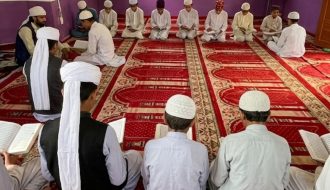
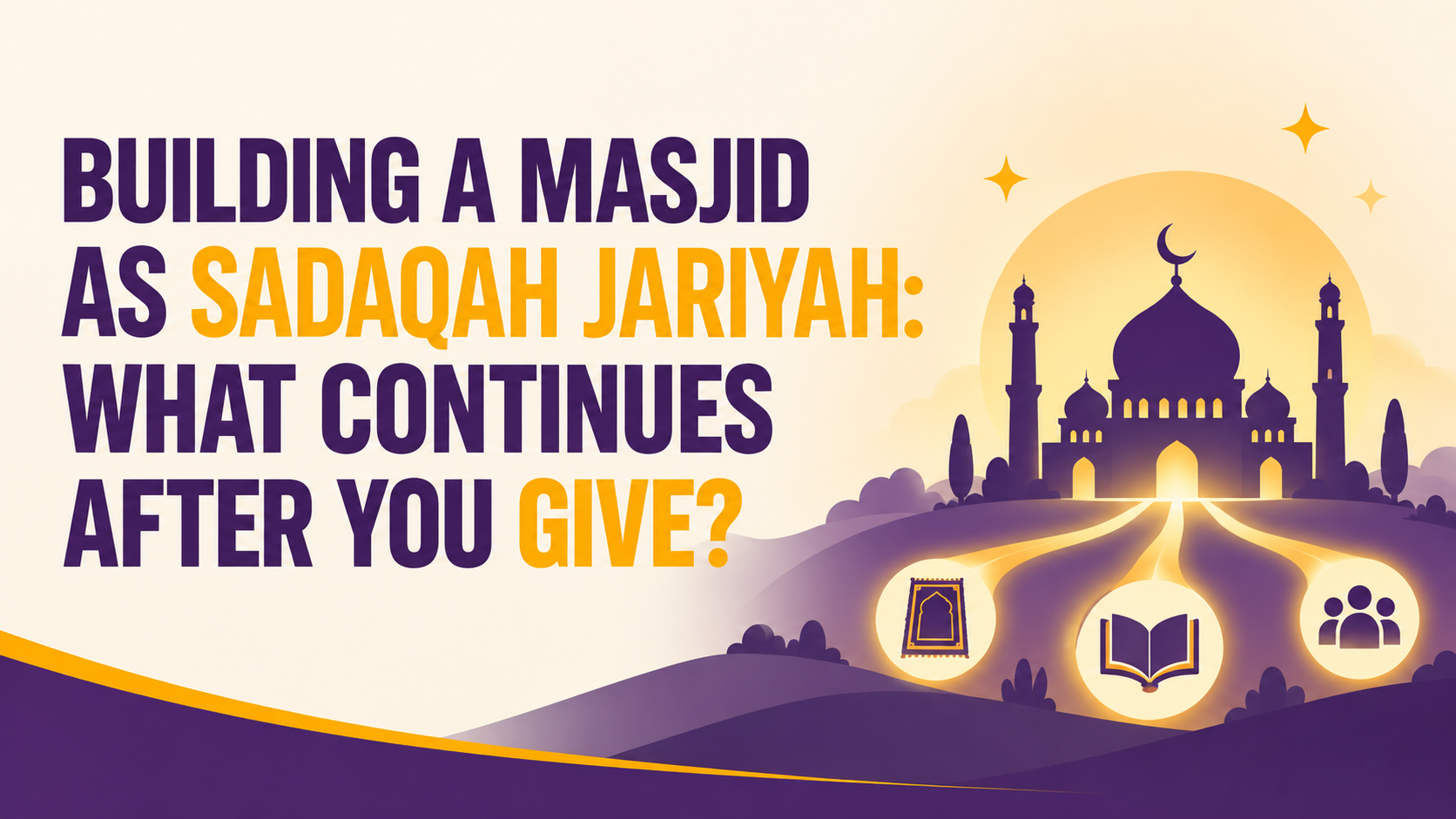
A masjid may serve a community long after its first donor has left the world. People gather there to pray, remember Allah and learn. This continued use is why mosque construction is widely chosen as Sadaqah Jariyah.
The promise is great, but responsible giving requires more than funding walls and a roof. A masjid must be needed, lawfully secured, safely built and supported after it opens.
1. Why masjid-building carries a special promise
‘Uthman ibn ‘Affan reported that the Prophet Muhammad ﷺ said:
“Whoever built a mosque, seeking Allah’s pleasure, Allah would build for him a similar place in Paradise.”
(Sahih al-Bukhari 450)
Sahih Muslim records the parallel wording:
“He who built a mosque for Allah … Allah would build for him a house in Paradise.”
(Sahih Muslim 533a)
The wording directs attention to intention. The building is for Allah’s worship, not chiefly for status, family prestige or control over a community.
The hadith also does not say that one person must pay the entire cost. A contribution, share or necessary part of the work may be included in the good according to the donor’s role and sincere intention, while the exact reward belongs to Allah’s judgement.
2. What continues after construction
The Prophet ﷺ said that when a person dies, their deeds end except for recurring charity, beneficial knowledge and a righteous child who prays for them.
(Sahih Muslim 1631)
A functioning masjid can bring together the first two categories. Its physical space may remain a recurring charity, while sound teaching within it spreads beneficial knowledge.
The continuing element may include:
- Congregational and individual prayer.
- Qur’an recitation and remembrance of Allah.
- Reliable teaching for children and adults.
- Space for new Muslims, families and travellers to worship.
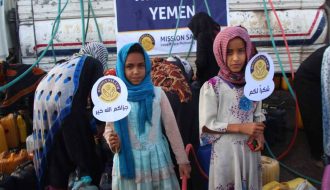
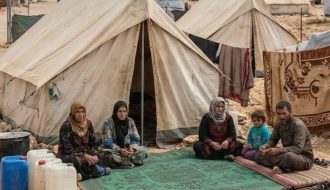
- Community support delivered in a suitable way.
These are reasonable forms of continuing benefit, not a calculation of exact reward. We should avoid promising a donor a fixed share of every deed performed in the building. Allah knows intentions, acceptance and outcomes.
3. A Masjid Is More Than Bricks
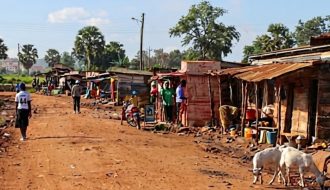
The local setting should guide the design. A hot area may need strong ventilation. A remote village may need reliable lighting and water storage. A larger town may need safe entrances, suitable washing facilities and enough space for women and children.
The community also needs a clear plan for leadership and access. A building controlled by one family, kept closed for long periods or placed where worshippers cannot reach it may not fulfil the purpose donors expected.
A beautiful building can remain locked, inaccessible or unaffordable to run. A simpler building with safe facilities and trusted local stewardship may serve people far better.
The project should consider prayer space, ventilation, water and sanitation, accessibility, safeguarding, utilities and the needs of women, children, older people and worshippers with disabilities. It should also have people able to lead, teach and maintain the site.
This is where Sadaqah Jariyah becomes practical. Continuing reward is connected to continuing benefit. Maintenance is not an afterthought to the project; it helps preserve the use for which the building was funded.
4. New build, restoration or a share?
Not every community needs a new masjid. Some need a damaged roof repaired, safe washing facilities installed, electricity restored or an existing building expanded.
Restoration may return a masjid to use faster and at lower cost. A pooled fund or construction share also allows many donors to participate without waiting until they can finance a complete building.
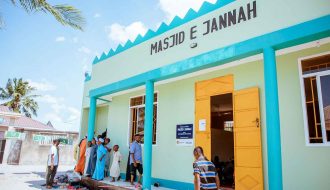
Mission Salaam’s current Build a Masjid appeal includes full projects in Pakistan, Azad Kashmir and parts of Africa, alongside restoration, shares and a renovation fund. That range gives donors a useful reminder to ask what form of support the community actually needs.
5. Questions to ask before donating
Ask for answers in writing when the donation is large. A project page should state the country, expected size, main facilities, estimated timescale and whether the price covers land. It should also explain who checks construction quality.
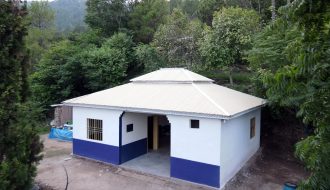
After completion, useful evidence may include dated photographs, a location, a short report and details of the local committee. These checks protect the charity as well as the donor and community.
Before choosing a project, ask:
- Who owns the land, and is its religious use legally protected?
- Has the local community requested the masjid?
- Are planning permission and construction oversight in place?
- What exactly does the quoted cost include?
- Who will manage the masjid after completion?
- How will utilities, repairs and safeguarding be funded?
- What updates and completion evidence will donors receive?
- What happens if the project is delayed, overfunded or unable to proceed?
A responsible charity should answer these questions clearly or acknowledge what is still being arranged.
6. Intention, recognition and stewardship
A masjid may be donated in memory of someone who has died, based on the sound evidence that charity can benefit the deceased. A name plaque is not required. If recognition is offered, it should not become the purpose of the gift or expose a grieving family without consent.
You may make a simple intention: “O Allah, accept this contribution for Your sake and make it a continuing benefit.” Then select the project with the same care you would apply to any trust.
The donation begins the work. What continues after it is the worship, access and sound benefit that a well-stewarded masjid makes possible.